A custom vinyl pressing is one of the few products where the mistakes are largely invisible until the finished records arrive, at which point they are pressed into a few hundred copies and impossible to fix. Unlike a print job you can reorder next week, a run of records commits you to your audio, your artwork, and your timeline months in advance. The good news is that the failure modes are well known and every one of them is avoidable with a little planning. Most of them trace back to the same root cause, treating a physical, analog format as if it behaved like a digital one. Here are the mistakes that most often disappoint first-time buyers, and how to keep clear of them.
Cramming too much music onto each side
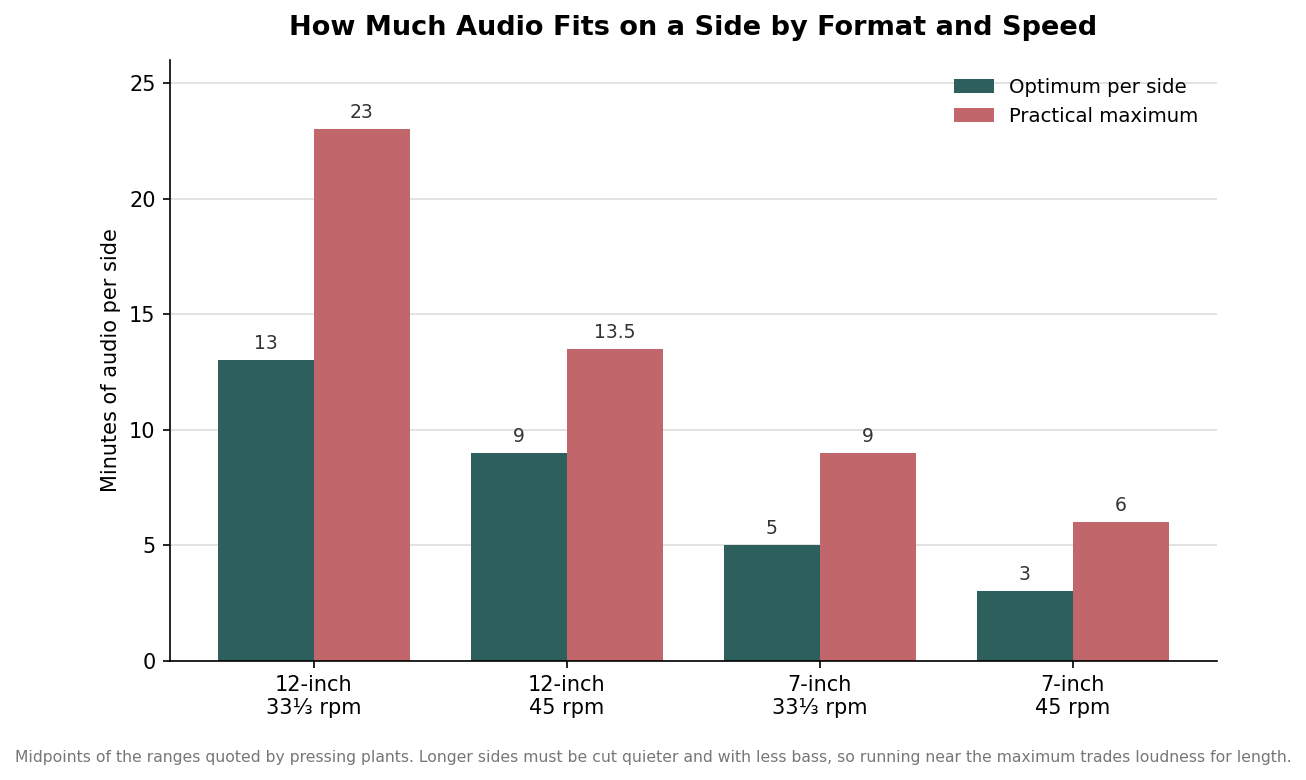
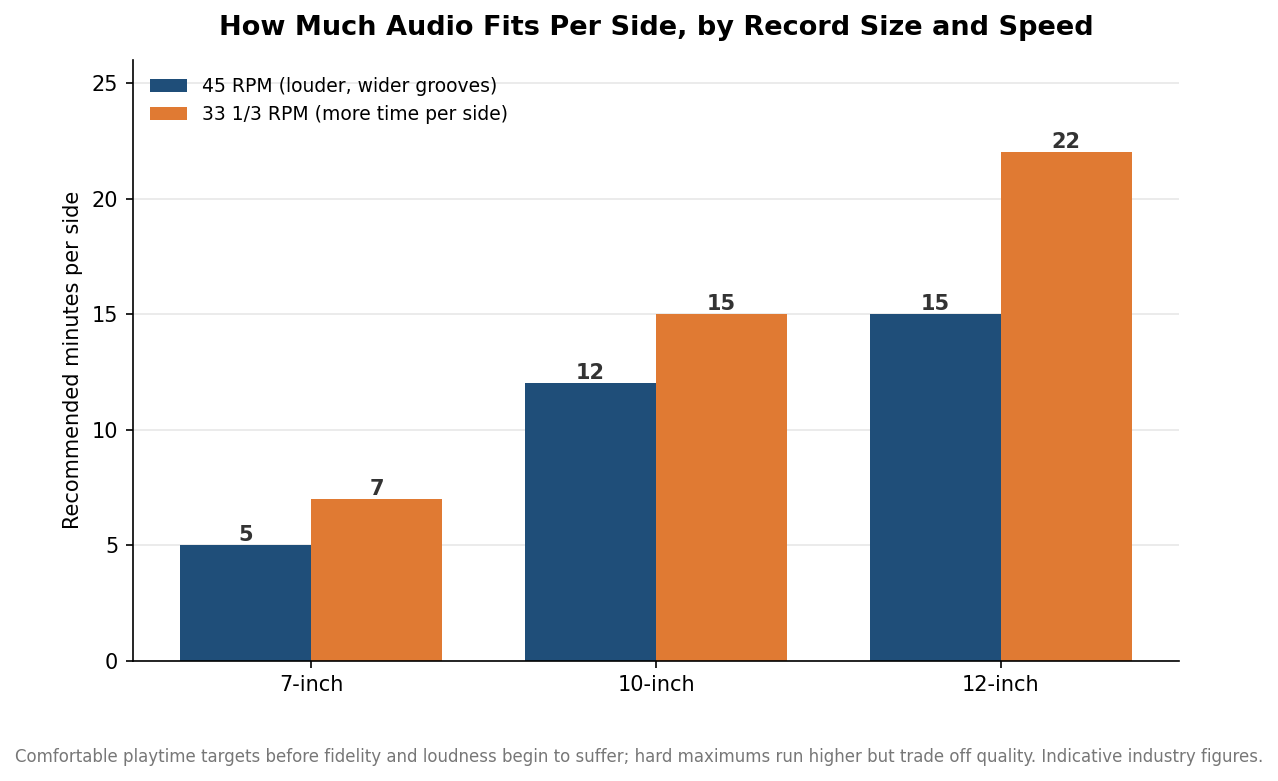
The most common and most damaging mistake is treating a record like a digital file with unlimited room. It is not. A record has a fixed amount of physical space, and the longer a side runs, the more the cutting engineer has to tighten the groove spacing, which directly costs you level, bass weight, and high-frequency clarity. There is a real, physical ceiling.
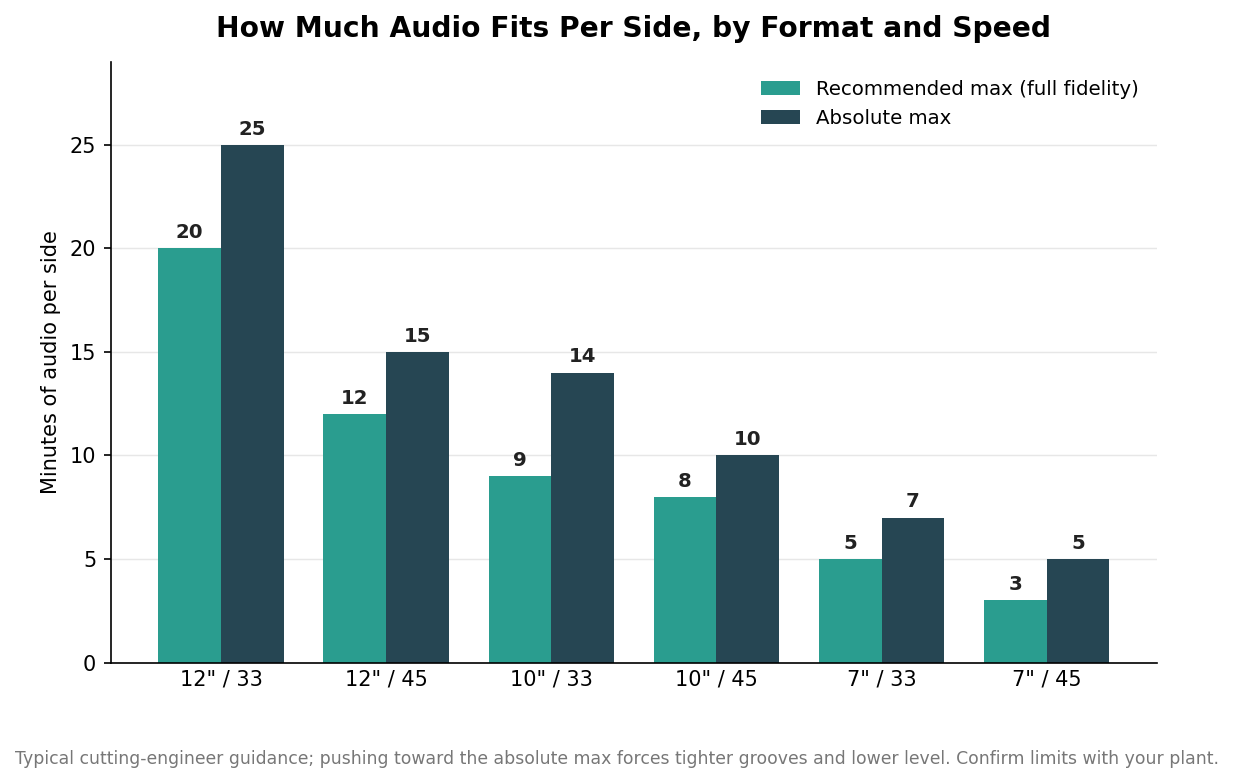
For a 12-inch LP at 33 rpm, roughly 16 to 20 minutes per side keeps everything sounding full, and about 25 minutes is the practical hard limit. Cutting a 45 rpm record buys you noticeably better fidelity but far less time, around 12 minutes for a comfortable side. If your album is running long, the fix is to plan the format around the runtime from the start, whether that means splitting across a double LP, dropping to 45 rpm on shorter sides, or trimming the tracklist, rather than forcing 28 minutes onto a side and wondering why it sounds thin.
Mastering as if it is headed to streaming
A master built for Spotify or a CD will not translate cleanly to a lacquer, and handing a plant your streaming master is a frequent misstep. Three differences matter most. Bass has to be centered in mono below the low frequencies, because stereo or out-of-phase bass makes the stylus physically jump out of the groove. Sibilance needs taming, since the sharp high-frequency peaks in vocal consonants distort when a stylus tries to track them. And the aggressive brickwall loudness that defines modern digital masters works against you here, because a vinyl cut benefits from preserved transients and dynamic range rather than a squashed, maximized waveform. Budget for a dedicated vinyl master, or at least a vinyl-aware revision, instead of assuming your existing files are ready to cut. The most reliable move is to talk to your pressing plant before mastering, because most cutting engineers will give you specific technical targets for their equipment, from the frequency below which bass must be summed to mono to the peak levels they prefer to see.
Ignoring the loudness-versus-length tradeoff when you sequence
Even with a proper master, how you order the songs changes how the record sounds. Level and high-frequency detail naturally diminish as the needle travels toward the center of the disc, so the inner grooves are the worst place for your most delicate or highest-energy material.
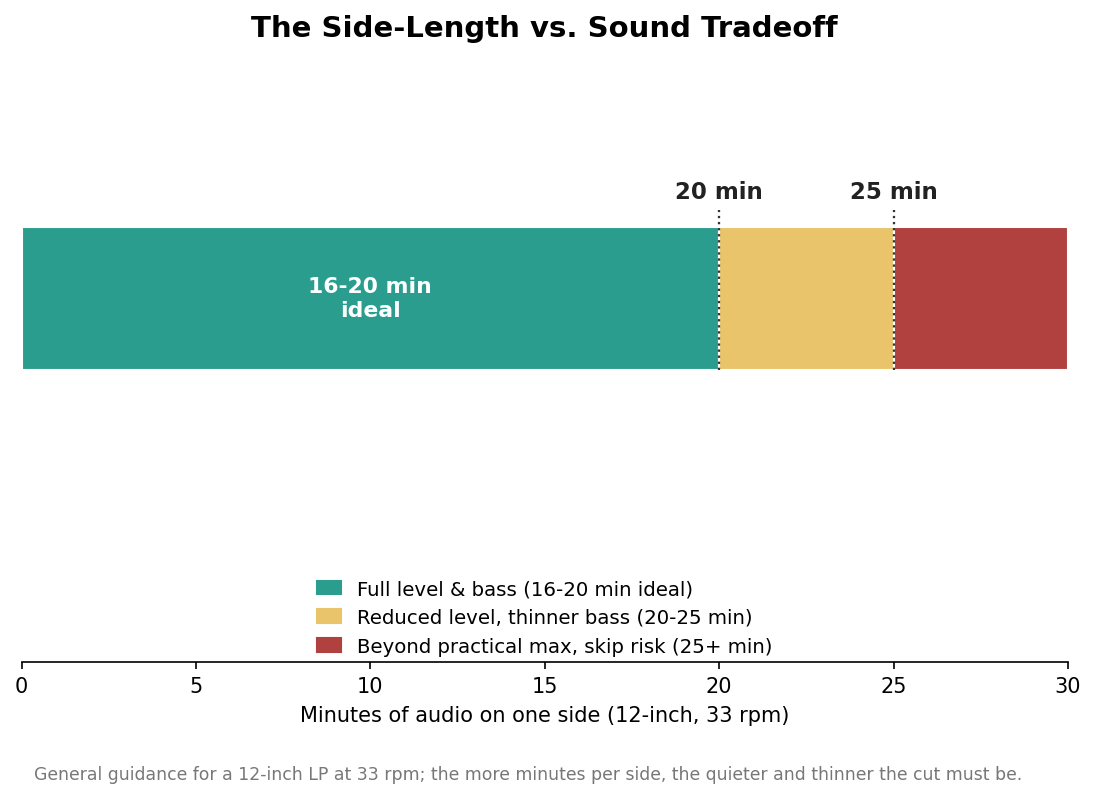
The practical rules follow from that physics. Put your louder, brighter, wider tracks near the start of each side where there is more room and the groove can swing harder, and place quieter or sparser songs toward the inner grooves. If a side has to run long, accept that it will be cut a little quieter overall, and plan the sequence so nothing critical lands where distortion and sibilance are most likely. Thinking about sequencing as an audio decision, not just an artistic one, is what separates a record that sounds even from one that fades as it plays.
Skipping the test pressing
When lead times feel long, the tempting shortcut is to approve the full run without listening to a test pressing first. This is the single riskiest thing you can do. A test pressing is a small number of records pulled from the actual stampers so you can hear exactly what the plant will produce, catching problems like distortion, off-center pressing, surface noise, or a mastering issue that only reveals itself on vinyl. Approving a test pressing adds a step, but it is the only point in the process where a problem is still cheap to fix. Once the full run is pressed, whatever is on those records is what you own. Always request the test pressing, listen to it critically on a proper system, and check more than one copy, since flatness, centering, and surface noise can vary between individual pressings. Only greenlight the run once the test pressings sound right.
Underestimating artwork specs and lead time
The last cluster of mistakes is logistical. On artwork, a record jacket and labels are a print job with their own requirements, so build files to the plant’s dielines with full bleed, work in CMYK rather than RGB, and keep resolution high enough for the finished size, remembering that the label has a center hole and a trim area to design around. On timing, vinyl is slow: the sequence of cutting a lacquer, plating, pressing test copies, waiting for your approval, and then pressing and packaging the full run commonly stretches across several months, and specialty color or finishing adds more. Confirm the current turnaround with your plant in writing before you promise a release date, add margin for the test-pressing approval, and place the order far earlier than feels necessary. Plan the calendar and the files with the same care you gave the audio, and the finished records will be worth the wait.