How to Store and Care for Custom Vinyl Records
Custom vinyl records last for decades when you store them upright, keep them in inner and outer sleeves, and protect them from heat, sunlight and damp. Customized Vinyl Records presses every record to play well, and this guide covers what happens after delivery: shelving, cleaning, handling, framing and shipping, plus which vinyl styles need the most attention.

- Store vinyl records upright, never in tall flat stacks
- Heat and direct sun are the main causes of warping
- Use an inner sleeve on the disc and an outer sleeve on the jacket
- Brush dry before each play; wet clean only when needed
- Free mockup within 24 hours, about 2 weeks turnaround, minimum 12
How should I store custom vinyl records so they stay flat and playable?
Store custom vinyl records upright, snug but not squeezed, in a cool, dry room away from sunlight and heat sources. Standing records on edge like books keeps weight off the grooves, while stacking them flat puts pressure on the bottom copies and can slowly bend them out of true. A record that leans at an angle for months can develop a gentle warp that shows up as a wobbling tone arm.
The shelf itself matters as much as the position. A sturdy bookcase or a dedicated record cube against an interior wall beats a windowsill, an attic, a garage or the trunk of a car. Heat is the biggest enemy of a pressed record, and a single afternoon in a hot vehicle can ruin a box that was perfect when it left the plant.
- Do: store upright, fill each shelf so records support one another, use bookends on partly empty shelves.
- Avoid: stacking flat, leaning at an angle, direct sun, radiators, damp basements and hot cars.
- Boxes: keep shipping cartons upright too, and open them soon after delivery so records can breathe.
Do custom vinyl records need inner sleeves and outer sleeves?
Yes. Custom vinyl records last longest with a clean inner sleeve against the disc and a clear outer sleeve over the jacket. The inner sleeve protects the playing surface from dust and scuffs when the record slides in and out, and the outer sleeve shields your printed record jacket from shelf wear, fingerprints and ring wear caused by the disc pressing through the board over time.
Paper inner sleeves are traditional and look right, but they can shed fibers and leave light scuffs on glossy surfaces. Lined or poly inner sleeves glide more smoothly and are a common upgrade for collectors who plan to play their records often. Whichever you choose, keep the record in its inner sleeve inside the jacket rather than loose.
For gift and award pressings, an outer sleeve is the difference between a jacket that still looks new at the next family gathering and one with frayed corners. If you plan to sell copies, a sealed outer layer also signals to buyers that the record is unplayed.
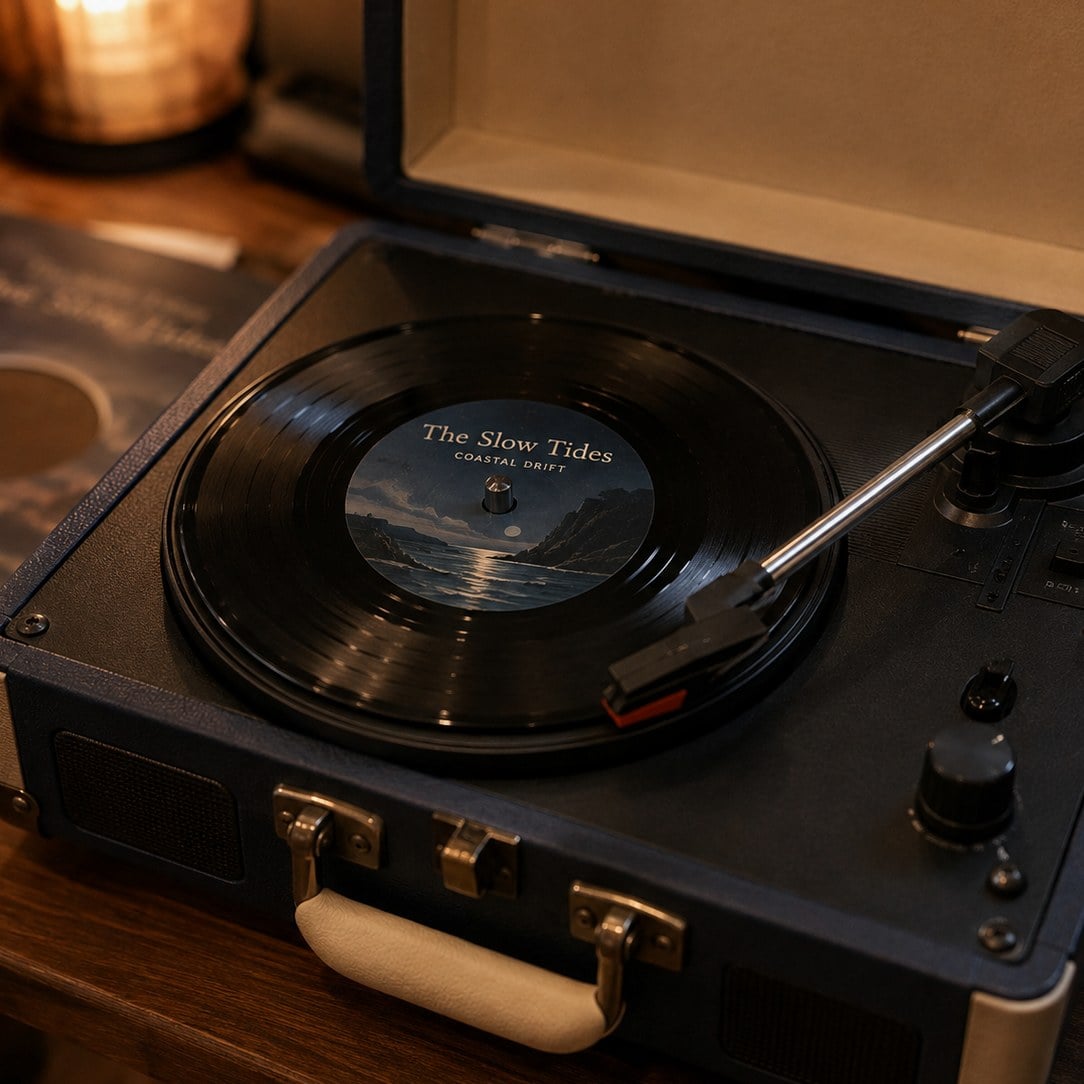
Which vinyl styles need extra care: black, colored, splatter or picture disc?
Every style of custom vinyl record follows the same basic care rules, but a few formats deserve extra attention. Standard black and colored vinyl records are the most forgiving for regular play. Splatter and marble vinyl shows dust and fingerprints more readily under light, so handling by the edges matters more. Picture disc records carry their artwork under a clear surface, which makes scratches easy to see and makes them a natural choice for display.
| Style | Main care concern | Best habit |
|---|---|---|
| Black vinyl | Dust in the grooves | Brush before each play |
| Colored vinyl | Visible fingerprints and sun fading of the jacket | Edge handling, keep out of direct light |
| Splatter and marble | Surface marks stand out against the pattern | Lined inner sleeve, gentle cleaning |
| Picture disc | Scratches on the image surface | Display in a frame or play sparingly |
If a record is mainly a keepsake, choose the style for how it looks on a shelf. If it will be played often, black or solid colored vinyl usually holds up to everyday listening with the least visible wear.
How do I clean a custom vinyl record without damaging the grooves?
Clean a custom vinyl record with a soft carbon-fiber or anti-static brush before each play, and save wet cleaning for records that are visibly dirty. A dry brush lifts surface dust that would otherwise be dragged through the grooves by the stylus. Hold the brush lightly on the spinning platter, then sweep it off the edge so the dust leaves the disc instead of collecting at the label.
For fingerprints or stubborn grime, use a cleaning fluid made for records and a microfiber cloth, wiping in the direction of the grooves rather than across them. Let the record dry fully before it goes back into its sleeve. Keep liquid off the paper center label, which can stain or wrinkle when wet.
- Brush the record dry on the turntable.
- If marks remain, apply record-safe fluid to a cloth, not directly to the label.
- Wipe gently along the grooves.
- Air-dry on a clean rack, then return the record to a fresh inner sleeve.
Avoid household glass cleaners, dish towels and paper towels, which can leave residue or fine scratches on the playing surface.
What is the right way to handle a pressed record when playing it?
Handle a pressed record by its outer edge and the center label only, never by the playing surface. Skin oils on the grooves attract dust and can leave marks that sound like faint crackle. Slide the record out of its inner sleeve by supporting the edge with one hand and the label with the other, then lower it onto the platter without dragging it.
Your turntable plays a part in how long custom vinyl records last. A clean stylus, a correctly set tracking weight and a level platter all reduce groove wear. A worn or dirty stylus does more damage over a few months than years of careful storage can prevent, so check it whenever playback starts to sound dull or noisy.
- Return the record to its sleeve as soon as the side finishes playing.
- Keep the dust cover closed while the record spins.
- Never leave a record sitting on the platter overnight or in sunlight.
How should I display a custom vinyl record as a gift or award?
Display a custom vinyl record in a frame made for records, mounted on an interior wall out of direct sun. Gift and award pressings, like the ones described in many orders through Customized Vinyl Records, often spend more time on a wall than on a turntable, so the display setup matters as much as the shelf setup for playing copies.
Choose a frame that holds the record by its edge or behind a mat rather than pressing glass against the grooves. Some owners frame the jacket and the disc side by side, which shows off both the cover art and a colored or picture disc. If the recipient may want to play the record later, pick a frame that opens from the back so the disc can be removed without tools.
For offices, studios and lobbies, rotate framed records away from windows and spotlights that throw heat. Faded jacket colors are hard to reverse, and a record that warps inside a frame can no longer be played even if it still looks fine from across the room.
How should custom vinyl records be packed for shipping or moving?
Pack custom vinyl records upright in a sturdy box that fits them snugly, with stiff board on both sides and no empty space for the records to shift. Corners take most of the damage in transit, so a record mailer with built-in corner protection is worth using for any copy you sell or send as a gift.
When you receive your order from Customized Vinyl Records, open the cartons, check a few copies and store the rest upright on a shelf rather than leaving boxes stacked in a hallway or a hot storage unit. If you are mailing records to fans or relatives, slide the disc out of the jacket and into its own inner sleeve beside the jacket inside the outer sleeve. That small step prevents the record from splitting the jacket seam on a rough trip.
- Use rigid record mailers, not padded envelopes.
- Fill gaps so the records cannot slide.
- Keep boxes out of vehicles and loading docks on hot days.
Can I plan my custom vinyl order around long-term care?
Yes. Thinking about care before you order helps you pick the right format, packaging and quantity of custom vinyl records. Archive or memorial pressings often benefit from a sturdy 12-inch record in a printed jacket, while a 7-inch single is easier to frame, mail and store in tight spaces. If you expect heavy play, set aside a few sealed copies so you always have a pristine record in reserve.
Customized Vinyl Records makes the planning step low-risk. You get a free mockup within 24 hours, unlimited free revisions, and you pay nothing until you approve the design. Standard turnaround is about 2 weeks after approval, with faster turnaround available through express shipping, and the minimum order is 12. Reorders can reuse approved audio and artwork, which is useful for replacing copies that wear out.
Read how it works, or request a quote through the custom quote form and mention whether your records are for playing, display or archive.
Frequently asked questions
Can custom vinyl records be stored flat in a stack?
Custom vinyl records should not be stored flat in tall stacks, because the weight of the upper copies presses on the lower ones and can bend them over time. A short stack for a day or two during sorting is fine, but long-term storage should be upright on a shelf with bookends. Customized Vinyl Records recommends unpacking shipping cartons soon after delivery and standing every record on edge.
Will a hot car warp a custom vinyl record?
A custom vinyl record can warp quickly inside a hot car, especially on a sunny day with the windows closed. Heat softens the vinyl enough for the disc to bend under its own weight or the pressure of other records. Carry records in the cabin with air conditioning, take them inside as soon as you arrive, and never leave a box of records in a trunk or parked vehicle.
Should I keep the shrink wrap on my vinyl records?
Shrink wrap on vinyl records protects the jacket at first, but tight shrink wrap can slowly squeeze the jacket and, in warm rooms, put pressure on the disc. Many collectors slit the wrap along the opening edge, or remove it and move the record into a resealable outer sleeve. Keep a few copies fully sealed only if you plan to sell them as unplayed.
Do picture disc records wear faster than black vinyl records?
Picture disc records tend to show wear sooner than black vinyl records because scratches and scuffs are easy to see on the clear surface over the artwork. Many owners treat a picture disc as a display piece and play it occasionally. Customized Vinyl Records suggests pairing picture discs with a record frame when the main goal is showing off the image.
How often should I clean a custom vinyl record?
A custom vinyl record benefits from a quick dry brushing before every play, which removes surface dust before the stylus reaches it. Deeper wet cleaning is only needed when you see fingerprints, smudges or grime, or when playback sounds noisier than usual. Records stored upright in clean inner sleeves and played on a clean stylus usually need wet cleaning only rarely.
Can a warped vinyl record be fixed at home?
A mildly warped vinyl record can sometimes be flattened with specialized record-flattening devices, but home methods using ovens, irons or heavy books often make the damage worse. Prevention is far more reliable than repair. Store records upright, away from heat and sunlight, and keep them out of vehicles. For a badly warped keepsake, a reorder from approved files is usually the cleaner fix.
What kind of inner sleeve is best for colored vinyl records?
Colored vinyl records stay cleanest in lined or poly inner sleeves, which slide smoothly and shed fewer fibers than plain paper. Colored, splatter and marble pressings show surface marks more clearly than black vinyl, so a smoother sleeve helps them keep their finish. Customized Vinyl Records customers who expect frequent play often upgrade inner sleeves for their own copies after delivery.
Is a record frame safe for a vinyl record I may want to play later?
A record frame is safe for a vinyl record you may want to play later as long as the frame does not press glass against the grooves and hangs away from sunlight and heat. Choose a frame that opens from the back without tools. Check the wall position too, since a spot above a heater or in afternoon sun can warp the record inside.
How should a family archive copy of a custom vinyl record be kept?
A family archive copy of a custom vinyl record should stay in its inner sleeve, inside the jacket, inside a clear outer sleeve, stored upright in a cool, dry closet or shelf. Avoid attics, basements and garages. Label the archive copy clearly so nobody plays it by mistake. Customized Vinyl Records can press a few extra copies so one stays sealed for the family.
Does humidity affect custom vinyl records and printed jackets?
Humidity affects printed jackets more than the vinyl itself, since damp air can cause cardboard to curl, stain or grow mildew and can make paper sleeves stick. Keep custom vinyl records in a dry room with steady conditions and good airflow. A sealed outer sleeve adds a light barrier, but it is no substitute for keeping records out of damp basements and bathrooms.
Can I mail a custom vinyl record inside its jacket?
A custom vinyl record can be mailed inside its jacket, but the disc may shift and split the jacket seam during a rough trip. Slide the record, still in its inner sleeve, out of the jacket and place it beside the jacket inside the outer sleeve. Then use a rigid record mailer with corner protection. Customized Vinyl Records ships orders packed upright to arrive flat.
Do custom vinyl records need special care in the first weeks after delivery?
Custom vinyl records need only normal care after delivery, but the first days matter because cartons often sit in hallways, porches or cars. Open the boxes promptly, inspect a few copies and move the records onto an upright shelf. Keep them away from heaters and windows. Customized Vinyl Records suggests reporting any visible shipping damage right away so it can be reviewed.
Get a free mockup for your vinyl records
Send your logo or idea and the quantity you have in mind. Customized Vinyl Records returns a free mockup within 24 hours, you approve the design before anything is produced, and standard turnaround is about two weeks with faster options available. Get a custom quote.
Win Free Stuff
Enter below for a chance to win plus receive 10% off your first order.
🎉 You are in!
We will text you your 10% off code. Good luck!